What is The 'I Have Therapy' POV Trend, Explained: Why Reels Is Reframing the Cafe and the Bookstore as 'Therapy'?
Open Instagram Reels today and you will see this format roughly every fifth video: a creator films themselves in a small everyday scene — pouring an espresso, walking into a bookstore, putting on running shoes, sitting alone at a sunny cafe — with on-screen text that reads, in some variation, "sorry, I can't today, I have therapy." The cut reveals what therapy actually means to them. It is almost never a couch and a clipboard. This is the "I Have Therapy" POV trend, and as of the week of May 18-23, 2026 it is the single most-replicated Reels format on the platform, with cross-pollination to TikTok accelerating in the last 72 hours ahead of Memorial Day weekend. NewEngen's weekly Instagram trend report flagged it as the dominant POV format two weeks running. Lightreel's May report calls it the breakout Reels trend of Q2. Several mainstream culture desks have started writing it up this week as the joke crosses from creator-economy circles into mass adoption. This explainer covers what the format actually is, where it came from, why it has landed so hard right now, the (genuinely interesting) mental-health science underneath the joke, and the early backlash from clinicians who have started warning that the trend romanticizes avoiding actual therapy. We have been tracking adjacent confessional-format trends like the 'I Am Home' Beat It format and the soft life aesthetic for months, and "I Have Therapy" sits squarely in the same lineage — a five-second gesture that smuggles a real generational confession underneath it.
What the trend looks like
The structural template is rigid, which is what makes it easy to replicate and easy to recognize:
- The decline. The video opens with on-screen text like "sorry I can't today, I have therapy" or "can't, I have therapy at 4" or "i have therapy, rain check." Often the creator is shown briefly typing a text or holding a phone.
- The cut. A hard cut, usually beat-synced, to whatever the creator is actually doing.
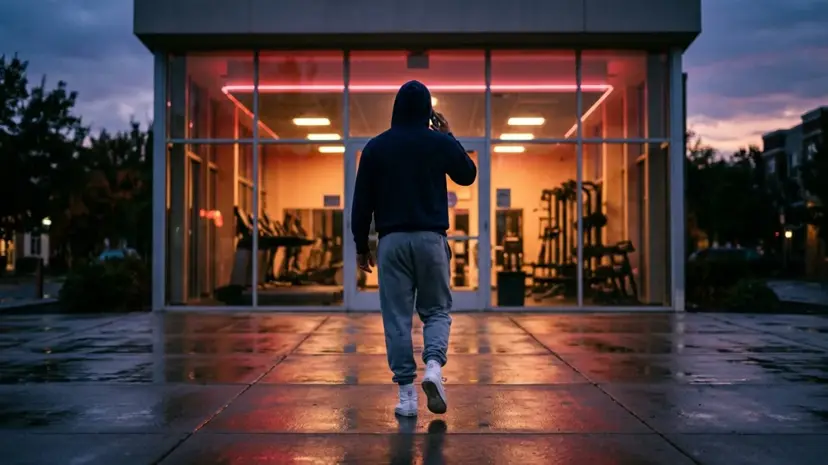
- The reveal. A short montage of the creator's actual restorative ritual: a solo coffee with a paperback, an early-morning Pilates class, a long walk past store windows, a quiet pottery studio, an hour at the climbing gym, sitting in the car listening to one specific album before going inside. The reveal is the joke.
Most successful videos are 8 to 14 seconds. The popular audio tracks are split between original-audio voice-over and a small set of cozy lo-fi beats that have been organically attached to the format. The format is fully available to business accounts because there is no licensed-music gatekeeping, which is a key difference from the Beat It 'I Am Home' format that has dominated TikTok over the same period and has been locked to creator accounts only.
Where the format actually came from
The format is widely attributed to the Reels creator @seetorra, a Brooklyn-based lifestyle and food creator with a longstanding aesthetic around striped-awning European cafes, espresso, and long solo walks. Her seed post in early May showed her texting a friend "can't tonight, I have therapy" and then cutting to her sitting alone at a corner cafe with two friends, espresso, a bowl of pastries, and the line "this is my therapy" appearing on screen at the reveal beat.
The post broke into the multi-million-view bracket within 48 hours. Within a week, the format had been replicated across Reels by creators in fitness, food, fashion, parenting, and the burgeoning "unbothered Gen-X mom" content category that has been quietly eating engagement on Reels in 2026. NewEngen's report describes the trend as "hitting hard with audiences tired of performative wellness content," which matches the broader pattern we have been tracking around de-influencing and the move away from polished wellness aesthetics toward what creators describe as "actual life."
By the week of May 18, the format had crossed onto TikTok in volume — the typical Reels-to-TikTok format diffusion lag of 7 to 10 days, which is consistent with the broader pattern of cross-platform trend migration we mapped in our breakdown of the TikTok soundtrack pattern of the decade.
Why this trend specifically, and why now
Three converging forces explain the timing.
One: wellness fatigue is real and measurable. Engagement on traditionally-aesthetic wellness content — the morning-routine 5am ice-bath cold-plunge journaling Reel — has been declining across Instagram since late 2025. The bottom-up creator response has been a wave of formats that explicitly reject the performance: the "bare minimum Monday," the bed-rotting trend from last year, the "lazy girl job" wave. "I have therapy" is the next step in that arc. It does not reject self-care. It just expands the definition of what counts as self-care to include things that are not aesthetic enough to be obviously marketable.
Two: actual therapy access is collapsing in a measurable way. The American Psychological Association's 2026 access report, published in March, found that 67% of US adults who sought mental-health care in the prior 12 months reported either being unable to find a provider taking new patients, waiting more than 8 weeks for a first appointment, or paying fully out of pocket. Average out-of-pocket session cost in major US metros is now $235. The cost-of-care story is downstream of the broader cost-of-living squeeze that has dominated US household finance for two years running (our paycheck calculators show the bite for typical professional incomes). When real therapy is hard to access, jokingly reframing your existing rituals as 'therapy' carries a sharper edge than it did even three years ago.
Three: a specific clinical concept has gone mainstream. The mental-health corner of TikTok and Reels has spent the last 18 months popularizing the term "nervous-system regulation" — a polyvagal-theory-adjacent framing of self-care as activities that demonstrably shift you out of fight-or-flight and into rest-and-digest. The "I have therapy" format is essentially a creator-economy translation of that concept. The reveal works because the activity shown is one that genuinely down-regulates the autonomic nervous system: a slow coffee, a long walk, a low-stakes social hangout. The trend would not be readable as a joke if audiences had not already internalized the underlying concept.
The actual science of restorative activity
There is more substance here than a viral format usually carries. The research on what actually restores cognitive and emotional resources outside of clinical therapy is robust and converges on a few categories that the trend captures with surprising accuracy.
Solo time in third places. Sociologist Ray Oldenburg's framework of "third places" — community spaces that are not home and not work — has been tied in subsequent research to lower self-reported loneliness, higher subjective well-being, and lower cortisol levels at the end of the day. The cafe, the bookstore, the gym, the park are all canonical third places. (We covered the inverted version of this framework in our breakdown of the 'I Am Home' trend, which is essentially the same observation viewed from a different angle.)
Low-intensity movement. The exercise-and-mood literature has consistently shown that low-intensity sustained movement — a 30 to 60 minute walk, a slow swim, easy yoga — produces measurable reductions in anxiety markers and is, for mild-to-moderate symptoms, comparable in effect size to many first-line interventions. The trend's high use of "long walk" reveals is not accidental. For the calorie/activity side of the math, our fitness calculators cover the metabolic context.
Predictable rituals. The cognitive-behavioral literature on rituals — small, predictable, self-chosen sequences of action — shows them to be a meaningful anxiety regulator independent of the activity itself. Putting on the same album on the way home from work, ordering the same drink at the same cafe on the same day, the 'a sandwich on a park bench' lunch — all qualify. This is why the format's reveals are almost always habitual rather than novel: the predictability is the point.
None of this replaces actual clinical therapy for people who need it. But the underlying observation — that low-cost, accessible, repeatable rituals do meaningful work — is well-supported, and the trend is a surprisingly clean popular translation of it.
The clinician backlash
Counterargument is also part of the trend's lifecycle. A small wave of licensed clinicians have begun posting their own response Reels and TikTok videos this week, with the basic concern being that the format risks normalizing the avoidance of actual therapy by people who genuinely need it. The most-circulated example, posted May 20, was from a licensed clinical social worker in Chicago whose video made the case that "calling your latte therapy is fine when you are 90% okay; it becomes dangerous when you are 40% okay and avoiding the conversation."
The clinical-skeptic position has a real point. The literature is also clear that for moderate-to-severe symptoms — major depressive episodes, PTSD, panic disorder — restorative rituals are insufficient and clinical intervention significantly improves outcomes. The defenders of the trend have generally responded that the joke obviously presupposes that the speaker is not in clinical-need territory, and that mocking the language of self-care in a low-stakes way is itself a form of de-stigmatization. Both readings are probably true at the same time. The clinician position is the more durable one for the long tail of the trend's discourse.
Who has actually posted it
The participation profile is broader than typical viral formats:
- Food and lifestyle creators: The original adoption cohort. Espresso shots, croissants, market hauls.
- Fitness creators: Climbing gyms, Pilates studios, long-walk reveals. Significant overlap with the silent walking trend.
- Parenting creators: 'My therapy is the car in the Target parking lot before I go in' has become a sub-format unto itself with broad relatability among parents of young kids.
- Gen-X creators: Notable above-baseline participation, particularly in the woodworking, gardening, and hobby-craft categories. This is consistent with the broader 2026 pattern of older creator participation in Reels formats that have a confessional, relatable hook.
- Brand accounts: Already in. Because there is no licensed-music gatekeeping, hospitality brands, bookstores, indie coffee chains, fitness studios, and at least one major airline have posted brand-account versions. Brand-account saturation typically pulls forward peak fatigue by 7 to 10 days, which is part of why we expect the format to start visibly cooling around June 2.
How long it will last
The standard trend-lifecycle clock applies, with the brand-account caveat. Our base case is that the format remains dominant through Memorial Day weekend and the first week of June, then enters visible fatigue around June 8 to 12, then settles into evergreen meme-recap rotation for the rest of the year. The underlying concept — reframing self-chosen restorative rituals as 'therapy' — is durable enough that we expect the language itself to outlive the format. "My therapy is X" is likely to become a stable phrasing the way "main character energy" did in 2021.
The throughline
The trend works for the same reason that the best confessional-format trends always work: the joke and the truth are the same sentence. The format pretends to be ironic about self-care but is actually a sincere argument for an expanded definition of it. That is also why we expect it to be remembered as one of the defining Reels formats of mid-2026, even after the literal format stops being replicated. The phrase outlives the trend.
For the broader pattern of how confessional micro-formats fold into long-arc culture, our breakdown of the TikTok soundtrack pattern of the decade covers the full lifecycle mechanism. For the third-place sociology that underlies why specific reveal locations land, our explainer on the 'I Am Home' Beat It format covers the inverted reading.
Origin
The 'I Have Therapy' POV format was seeded on Instagram Reels by lifestyle and food creator @seetorra in early May 2026 with a now-multi-million-view post that opened with the text 'can't tonight, I have therapy' and cut to her sitting at a corner cafe with two friends, espresso, and a bowl of pastries, captioned 'this is my therapy.' The format spread rapidly across Reels through the second and third weeks of May, with major adoption from food, fitness, parenting, and Gen-X creator communities. The preconditions trace to multiple converging forces: a measurable decline in engagement for traditionally-aesthetic wellness content on Reels since late 2025; the American Psychological Association's March 2026 access report documenting that 67% of US adults seeking mental-health care reported access barriers (8+ week waits or out-of-pocket cost averaging $235 per session in major metros); and the 18-month mainstreaming of the term 'nervous-system regulation' in the mental-health corner of TikTok and Reels, which gave audiences a shared vocabulary for the kind of activities the reveal cuts depict. By the week of May 18, the format had crossed onto TikTok in volume — consistent with the typical 7-to-10-day Reels-to-TikTok diffusion lag — and was being written up by mainstream culture desks. Brand accounts began posting versions almost immediately because, unlike the parallel 'I Am Home' Beat It format, there is no licensed-music gatekeeping.
Timeline
Why Is This Trending Now?
The 'I Have Therapy' POV format has become the dominant Instagram Reels trend over the past two weeks (May 11-23, 2026) and crossed onto TikTok in volume in the last 5 days. NewEngen's weekly Instagram trend report flagged it as the dominant POV format two weeks running. Lightreel's May 2026 trend report calls it the breakout Reels format of Q2. Mainstream culture desks at outlets including Today and Buffer have started writing it up this week as the format diffuses past creator-economy circles into mass adoption. The format is landing right now because three forces converged at once: measurable wellness-content fatigue on Reels, the March 2026 APA report documenting collapsing mental-health-care access (67% of US adults reporting access barriers, average $235 out-of-pocket per session in major metros), and the mainstream adoption of 'nervous-system regulation' as a popular framing for self-care. A clinician backlash arrived this week — a circulated May 20 response video from a licensed clinical social worker in Chicago argued the trend risks normalizing avoidance of real care — which is itself a marker that the format has crossed from niche-creator awareness into a mass-discourse phase. Search interest for queries like 'I have therapy trend,' 'I have therapy Reels,' 'seetorra trend,' 'what is the I have therapy trend mean,' and 'nervous system regulation TikTok' has climbed sharply since May 14 and is still accelerating ahead of Memorial Day weekend.
Frequently Asked Questions
Sources
- NewEngen — Instagram Trends: May 2026 (I Have Therapy POV format coverage)
- Lightreel — What Is Trending on Instagram, May 2026 Weekly Report
- Rough Patch Counselling — Is The 'This Is My Therapy' TikTok Trend Dangerous?
- Buffer — 13 Trending Songs on TikTok in May 2026
- SocialBee — 2026 TikTok Trends You Can't Miss
- Later — Top Instagram Reels Trends to Try in 2026
- SocialPilot — Instagram Reels Trends: Trending Audio This Week (2026)
- Wikipedia — Third place (Ray Oldenburg)